Go to topics on this page > A Decade of Innovation > Meet the team
About Us
Based on 11 years of research, the University of Waikato Battery Team has discovered that the failure of current rechargeable battery management systems (BMS) to reliably predict state-of health (SoH) and state of charge (SoC) can be addressed with innovative, accurate battery measurement technology. The industry acknowledges the problem: current inaccurate battery measurement systems result in pre-emptive replacement of batteries, thus reducing financial revenues, increasing waste and pollution, and causing environmental damage. We now need to complete our research, test it, and move from laboratory-based findings into real-world situations.
Nō ngā rangahau i ēnei tau tekau mā tahi kua hipa, kua tūhuraina e Te Kāhui Pūhiko o Waikato, ka taea te aro ki te ngoikoretanga o ngā pūnaha whakahaere pūhiko ki te matapae tika i te oranga me te hihiko, mā ngā hangarau ine pūhiko auaha, tika anō hoki. Kei te mārama te ahumahi ki te raru: ka hua ake i ngā pūnaha ine pūhiko hē o te wā, ko te whakakapitanga tōmua o ngā pūhiko, me te aha, ka heke ko ngā moniwhiwhi ahumoni, ka piki ko ngā para me ngā parahanga, ka raru hoki ko te taiao. I tēnei wā, me whakaoti mātou i te rangahau, me whakamātau, ā, me neke i ngā kitenga ā-taiwhanga pūtaiao ki ngā horopaki i te ao tūturu.
A Decade of Innovation: Battery Research at the University of Waikato
For-profit companies that use batteries – from the huge battery energy storage systems (BESS) that support the electricity grid to tiny medical implants, as well as energy storage of solar systems, electric vehicles, mobile phones, and cell towers – need and will welcome our new technology.
Ka whai hua ngā kamupene monihua e whakamahi ana i ngā pūhiko – mai i ngā Pūnaha Rokiroki Pūhiko Nui ka tautoko i te whatunga hiko, ki ngā kuhi whakaora moroiti, tae ana ki ngā pūhiko kohi i te pūngao o Tamanuiterā, ki ngā pūhiko hihiko motokā, ki ngā pūhiko hihiko waea me ngā pourewa waea.
We have already identified a number of interested companies with a variety of use-cases. For example preventing premature battery replacement in medical devices with precision monitoring
Kua tohua e mātou ētahi kamupene me ā rātou kēhi whai take huhua e hiahia ana kia mahi ngātahi mai.
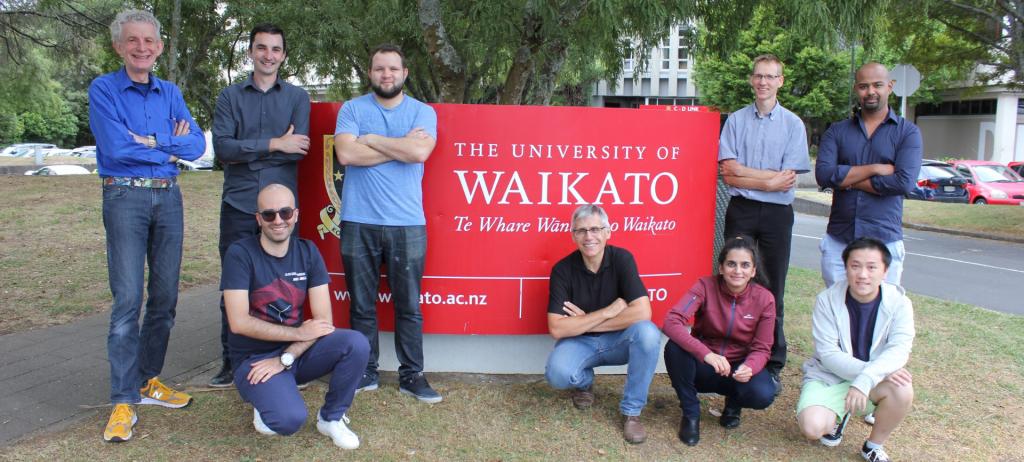
Meet the Team
The core team of scientists plus graduate students has over a decade of work invested in solving the problem, evidenced by 10 published journal papers, several conference papers, with more journal articles in preparation. The team additionally includes a business manager with experience in high-technology commercialisation, and an academic researcher with expertise in management communication, public relations and promotion of new products. External academics in New Zealand, the UK, and Australia contribute specialised skills.
The Waikato Battery Team brings diverse disciplines together: It consists of experts across (a) theory-based subject areas including physics and mathematics, (b) practical areas of electronic engineering and electrochemistry, and (c) applied areas including software development and industry implementation. The team is mostly NZ-based but enjoys expert guidance from overseas. Most team members have a track record of working together.+
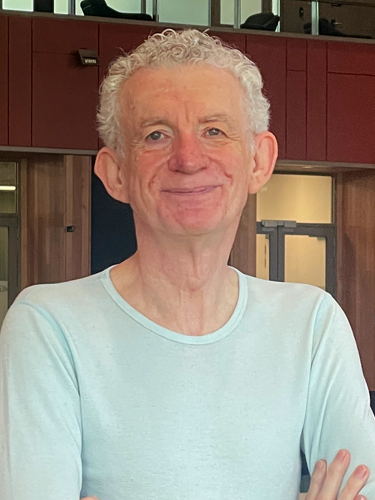
Jonathan Scott is a retired Honorary Professor of electronics. He worked for universities and private industry in Australia, California and New Zealand for more than 40 years. His research focuses on characterization, measurement, modeling and simulation, from microhertz to microwave frequencies. Recent work has strong biomedical context around human implant systems and electrode-electrolyte interfaces. Application of techniques developed in that context to rechargeable batteries formed the basis of the insights behind EISgage technology.
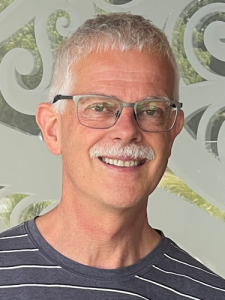
Michael Cree is an Associate Professor in the School of Engineering, teaching in the Electrical and Electronic Engineering program. His research interests include signal and image processing, time-of-flight range imaging, visual sensing, computer vision, embedded systems programming, numerical simulation, and battery modeling. He teaches at all levels and supervises students in both Electrical Engineering and Applied Physics.

Marcus Wilson is a Senior Lecturer in Physics and Chemistry in Te Aka Mātuatua – School of Science at The University of Waikato. He has an Honors degree in Physics and Theoretical Physics from the University of Cambridge (1992) and a Ph.D. in theoretical solid state physics from the University of Bristol (1995). He has worked in numerical modeling of physics processes in industry in the U.K. and in academia in New Zealand. His research interests include electric properties and dynamics of the human brain, transcranial magnetic stimulation, and more recently, time-series analysis of battery performance.
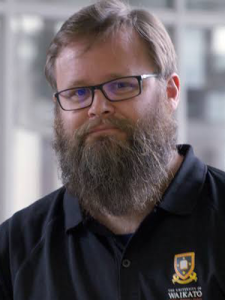
Lee Streeter is a Senior Lecturer at the University of Waikato School of Engineering. He was the general chair for Image and Vision Computing New Zealand and in 2019 he was awarded the Royal Society of New Zealand Cooper Award. Lee brings in extensive experience in measurement in the presence of noise and in signal/data processing algorithms and is the recipient of a Marsden Fast Start and MBIE Smart Ideas grants.

Godfrey Bridger is an experienced electronic engineering professional with a career spanning East Asia, New Zealand, and the UK. Highlights include roles with Schlumberger, founding a start-up for electronic meat-grading probes, marketing for BP International, serving on boards (Auckland Regional Services Trust, Mercury Energy), leading the Energy Efficiency and Conservation Authority, and running consultancies like Bridger Beavis and Associates and Strategic Lighting Partners. Recently, Godfrey has led projects for Counties Power, Simcro, HortResearch, Statistics NZ, and currently serves as the commercial lead for the University of Waikato’s Battery Group

Margalit Toledano is an Associate Professor of Management Communication at the Waikato Management School. She contributes practical experience as well as academic knowledge in public relations, promoting innovation and enterprises and introducing new products to the market.
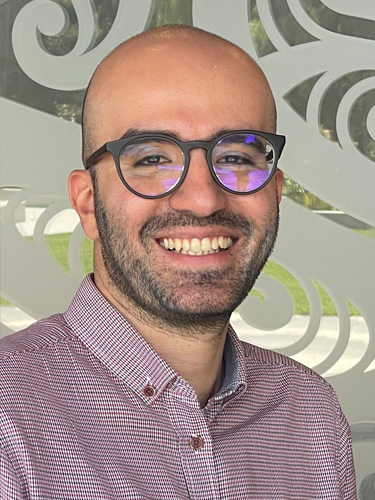
Sina Enteshari holds a PhD in Sustainability and a background in Mechatronics Engineering with both Bachelor’s and Master’s degrees. With extensive experience in sustainability and renewable energy, Sina has contributed to academia and research in Malaysia at UKM, and now serves as a Lecturer in Electrical Engineering at Wintec. Sina combines technical expertise with a passion for creating sustainable solutions for the future.

Chris Dunn had a background originally in the pharmaceutical sciences, with past specialisation in medicinal chemistry, pharmaceutical technology, small-scale and aseptic/sterile manufacturing and quality assurance. After working for several years as a pharmacist in both community and hospital settings in the UK he joined a medical publisher in Auckland as a writer in the mid-1990s, and worked in medical and scientific communications for the next 25 years. During that time he also gained experience of asset management/inspection and line structure engineering for the power supply industry. He returned to higher education in 2015 to undertake a Graduate Diploma in Electronics at the University of Waikato, which led to his involvement with the Battery Modelling Group and a subsequent PhD which he completed at the end of 2023.
Renee Goreham (physics, nanotechnology), University of Newcastle, Australia. Goreham collaborates with Allegro, manufacturer of liquid flow batteries
Aneta Stefanovska (physics, analysis of time-series data), Lancaster University, UK, contributes leading international expertise in the analysis of time series and has recently successfully collaborated with the Waikato-based researchers.